Hello, Lykkers! You know that moment when you're peeling a pinecone or staring at a sunflower, and suddenly you realize there's a weird, spirally pattern going on?
That's not just nature showing off. That's a mathematical sequence that has been baffling the brightest minds for centuries.
It's called the Fibonacci sequence, and it's basically a number pattern where each number is the sum of the two before it. So we start with 0, then 1, then 1 again (0+1), then 2 (1+1), then 3 (1+2), then 5 (2+3), then 8, 13, 21, 34, and so on. Sounds like boring math homework, right? But here's the kicker: this sequence shows up in the most unexpected places in nature, and nobody quite knows why.
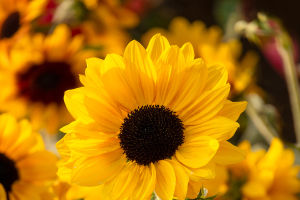
Take a sunflower head. The seeds are arranged in two sets of spirals, one going clockwise and one counterclockwise. Count them, and you'll almost always find adjacent Fibonacci numbers, like 34 and 55, or 55 and 89. Same with pinecones, pineapples, and even the bumps on a cauliflower. It's like nature decided to follow a recipe book written by a mathematician.
From Petals to Galaxies
Flowers love this pattern too. The number of petals on a flower often follows the sequence: lilies have 3, buttercups have 5, some daisies have 34 or 55. It's not a hard rule, but it's so common that it's spooky. And it doesn't stop at plants. Look at a nautilus shell. The spiral follows a ratio derived from Fibonacci, known as the golden ratio, roughly 1.618. That ratio pops up in hurricanes, spiral galaxies, and even the branching of trees.
However, here's where it gets weirder: we can model these patterns mathematically, but we still don't have a solid universal reason why they happen. Some scientists think it's about efficiency. In a sunflower, the Fibonacci arrangement packs the maximum number of seeds into the space. In a tree, it allows leaves to catch the most sunlight without shading each other. These are good guesses, but they don't explain everything.
The Mystery That Won't Quit
Why do galaxies spiral in the same pattern? That's not about seed packing. Could it be that this sequence is a fundamental property of how things grow, like a basic rule of the universe? Some researchers are looking at something called "dynamic self-organization" where simple physical forces might naturally produce these numbers without any intelligent design. But again, it's just a theory.
We do know that the golden ratio appears in human-made things too, like the pyramids or famous paintings, but that might be because we find it pleasing, not because it's inherently magical. The real magic is that the pattern exists in nature at all, and we can't fully explain it. That's like finding a secret recipe in your grandma's cookbook but missing the first page of instructions.
Why It Matters
This isn't just abstract curiosity. Understanding these patterns could help scientists design better materials, improve solar panel efficiency, or even predict natural phenomena. It's one of those beautiful reminders that nature operates on rules we're only beginning to understand.
So next time you see a pinecone or a sunflower, take a closer look. You're staring at a number puzzle that has stumped mathematicians, biologists, and physicists for hundreds of years. And that's kind of awesome.
Whether you're a math nerd or just someone who likes pretty spirals, this pattern is a gentle nudge from the universe that there's always more to discover. Keep your eyes open, and maybe you'll spot a Fibonacci sequence hiding in plain sight.