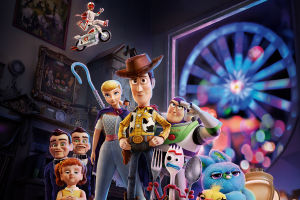
Have you ever felt that you no longer fit in a place where you once felt happy? That feeling sits at the heart of Toy Story 4, Pixar's 2019 sequel directed by Josh Cooley.
Through the cowboy toy, Buzz Lightyear, Bo Peep and a handmade toy named Forky, the film looks at self-worth, change and finding a new path. It is also very funny, and it won the Oscar for Best Animated Feature.
Every Toy Has Its Own Value
Forky is the film's best new character. Bonnie makes him from a spork and craft scraps at kindergarten orientation, and he is convinced he belongs in the trash. His repeated dives toward the nearest bin are among the funniest gags in the series, and Tony Hale's panicked voice work sells each one.
Behind the jokes sits a real question: who decides what something is worth? Bonnie treasures Forky even though he looks nothing like a store-bought toy, much as a handmade present can mean more than an expensive gift. The same goes for people, whose value does not have to be measured through other people's opinions.
When Attention Begins to Change
The cowboy toy has always believed his purpose is to care for his owner. Now he spends more time in Bonnie's closet than in her hands, so he throws himself into protecting Forky and bringing him back whenever he wanders off.
It is a surprisingly grown-up storyline for a family film. Children grow up, friendships change direction, and a role that once made us feel important can become less central. The film handles this gently: the past still matters, but it cannot stay the same forever.
Bo Peep Shows Another Way
Bo Peep's return is the film's smartest choice. Missing since Toy Story 2, she is now a confident, independent lost toy who explores the world, helps others and lives happily without belonging to one child.
Her choices push the cowboy toy to question his old belief that every toy needs an owner. Annie Potts plays her with warmth and humor, and their scenes together give the film its emotional core. Much like people weighing a steady job against an independent path, he learns there is more than one way to find purpose.
Build Relationships That Help Us Grow
The cowboy toy's efforts for Bonnie and Forky also show how care can get tangled with the need to feel needed. Bo Peep asks him whether he is acting only for Bonnie or also trying to keep his own place in her life.
Gabby Gabby, a doll in an antique store with a broken voice box, works as his mirror image: she wants a child's love so badly that she will take whatever she needs to get it. Through both of them, the film suggests that healthy relationships grow through mutual care and that we do not need to please everyone to deserve friendship.
Keep Working Toward Your Dreams
Duke Caboom, a Canadian stunt toy voiced by Keanu Reeves, is the film's scene-stealer. He still feels he let down his old owner by failing to make a jump, and winning back his confidence pays off in the antique store rescue.
Buzz gets a lighter arc, following his inner voice by pressing the buttons on his own chest, which leads to some of the film's best running jokes. Not every subplot gets much room, though, and the middle section can feel crowded with new characters.
Final Thoughts
Toy Story 4 is funny, warm and far better than a fourth film usually manages. The ending, with the cowboy toy choosing a new life alongside Bo Peep, divides longtime fans, but it fits the story's theme of change. It is well worth watching for families and for adults who grew up with the series.
Lykkers, have you ever discovered that a different place suited you better than the one you first chose? Share your experience.
Toy Story 4 | Official Trailer
Video by Pixar